
.svg)

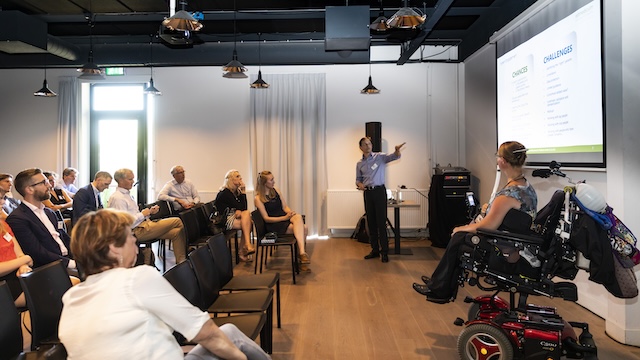
On 22 September 2022 in Barcelona, Spain, over 30 participants from local patient associations, hospitals, research centers, and industry representatives took part in a lively debate about patient engagement in clinical development.
The debate took place as part of the networking session organized by the Spanish Association for Lysosomal Diseases (Asociación MPS-LISOSOMALES España) and admedicum.
Topics covered during the debate included if the Spanish healthcare authorities were interested in patient participation in healthcare processes. Many attendees felt that authorities recognize the need to involve patients more, but there is still a long way to go to make it a reality. Training programs for patient experts to be involved in healthcare processes exist, but there is a lack of real commitment by authorities to involve patients in healthcare decision-making as a regular practice.
Attendees also debated on the topic of participant reports after taking part in a clinical trial. Patient associations mentioned that patients usually did not receive access to a clinical trial report or receive a notification when a clinical trial publication or press release was made available.
Patient representatives insisted that clinical trial participants should be among the first people to receive a lay-friendly report summarising the results, in the local language as a matter of respect and a sign of appreciation for the patient participating in the clinical trial.
Providing such a report as a regular practice could making joining a clinical trial more worthwhile for patients from the beginning. While it is a minor part of the clinical trial experience, it remains an opportunity for sponsors to improve their relationship with the people taking part in clinical trials.
Another popular debate topic was the measurement of patient engagement. All participants agreed that it can be measured but current metrics are too soft and not demonstrating the full impact of patient engagement.
Patient representatives suggested that the patients taking part in patient engagement activities should be asked questions following the activity:
- Would they join such an activity again in the future?
- Would they recommend a peer to take part in a similar activity?
- Did they receive sufficient information about the activity?
From an industry point of view, questions to ask to measure patient engagement include:
- Would management want to repeat the activity (for example if it was a Patient Advisory Board)?
- Was the clinical trial protocol changed as a result of patient engagement?
- How often did we involve patients in the clinical development
- How often did that lead to changes?
- How often did it lead to re-discussions of design?
The organizers hope to repeat this event format again as it led to a lively exchange and the time passed by very quickly.
Thanks to our moderator, Irene Tato from IEXP, and everyone who attended.